From Survey to Sunshine: The Solar Installation Journey
Making the switch to solar energy is a streamlined process designed to transition your home to clean power with minimal disruption. From the initial expert assessment to the final generation of free electricity, here is how your installation unfolds.
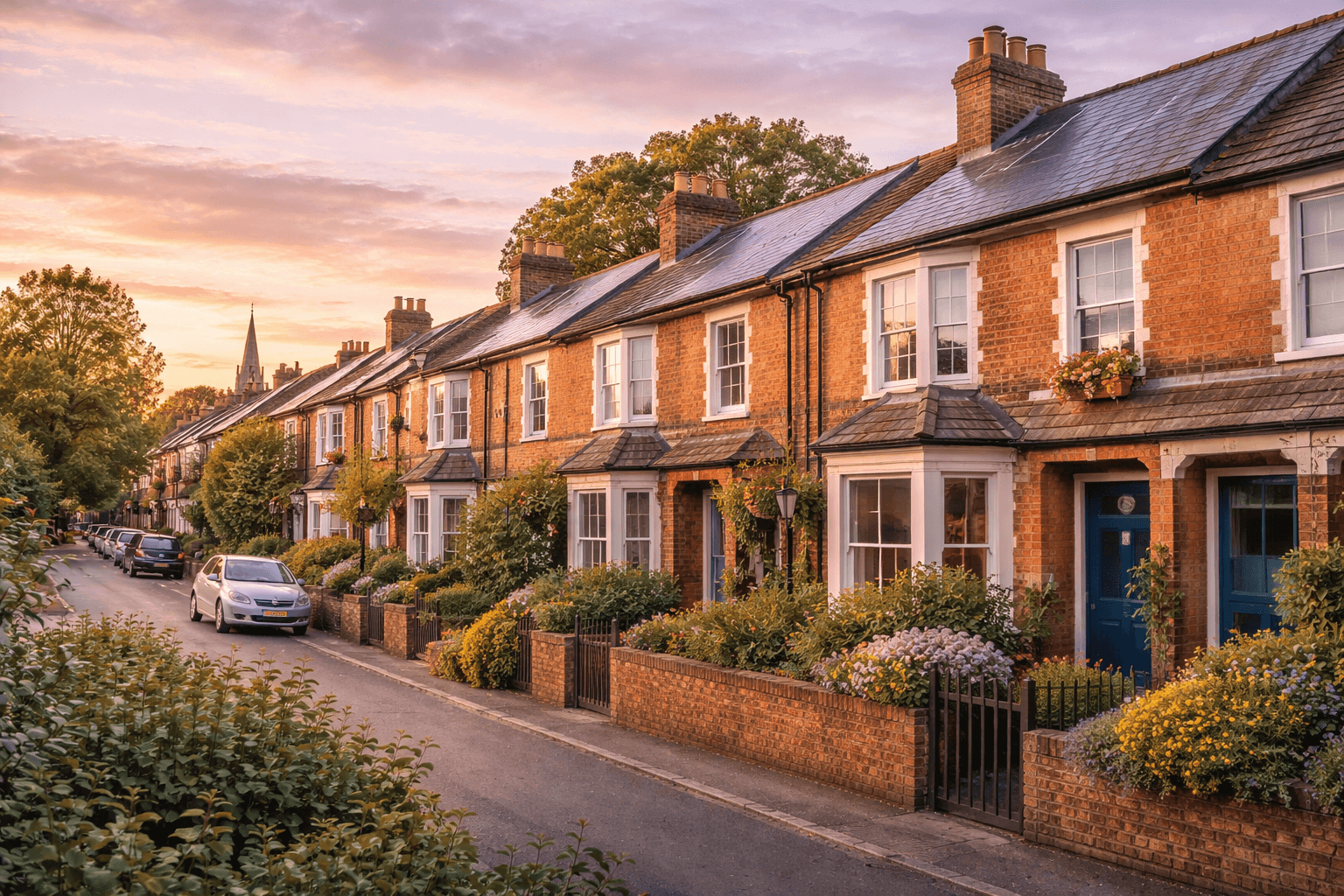
Are Solar Panels Right for Your UK Home?
While the UK isn’t known for constant sunshine, solar PV systems are incredibly efficient in our climate, even on overcast days. If you are wondering if your property is a candidate for renewable energy, consider these four key factors:
The table below provides a rough estimate of how many panels you might need based on your home size.
| House type | Estimate of number of panels | Potential energy impact |
| Mid-terrace | 6 | Ideal for lighting and small appliances |
| End-terrace/semi-detached | 8 | Significant reduction in grid reliance |
| Small detached | 12 | High offset for family homes |
| Large detached | 16 | Maximum savings and battery charging |
| Source: Energy Saving Trust | ||
What does solar panel installation involve?
The Planning and Design Stage
The journey begins with a detailed consultation and site assessment. Solar experts evaluate your property’s suitability by analysing roof orientation and measuring available space to ensure maximum sunlight capture. During this phase, technicians also identify potential shading from trees or chimneys and verify that your roof’s structure is strong enough to support the new system. Most domestic solar projects fall under “permitted development,” meaning they rarely require complex planning permission.
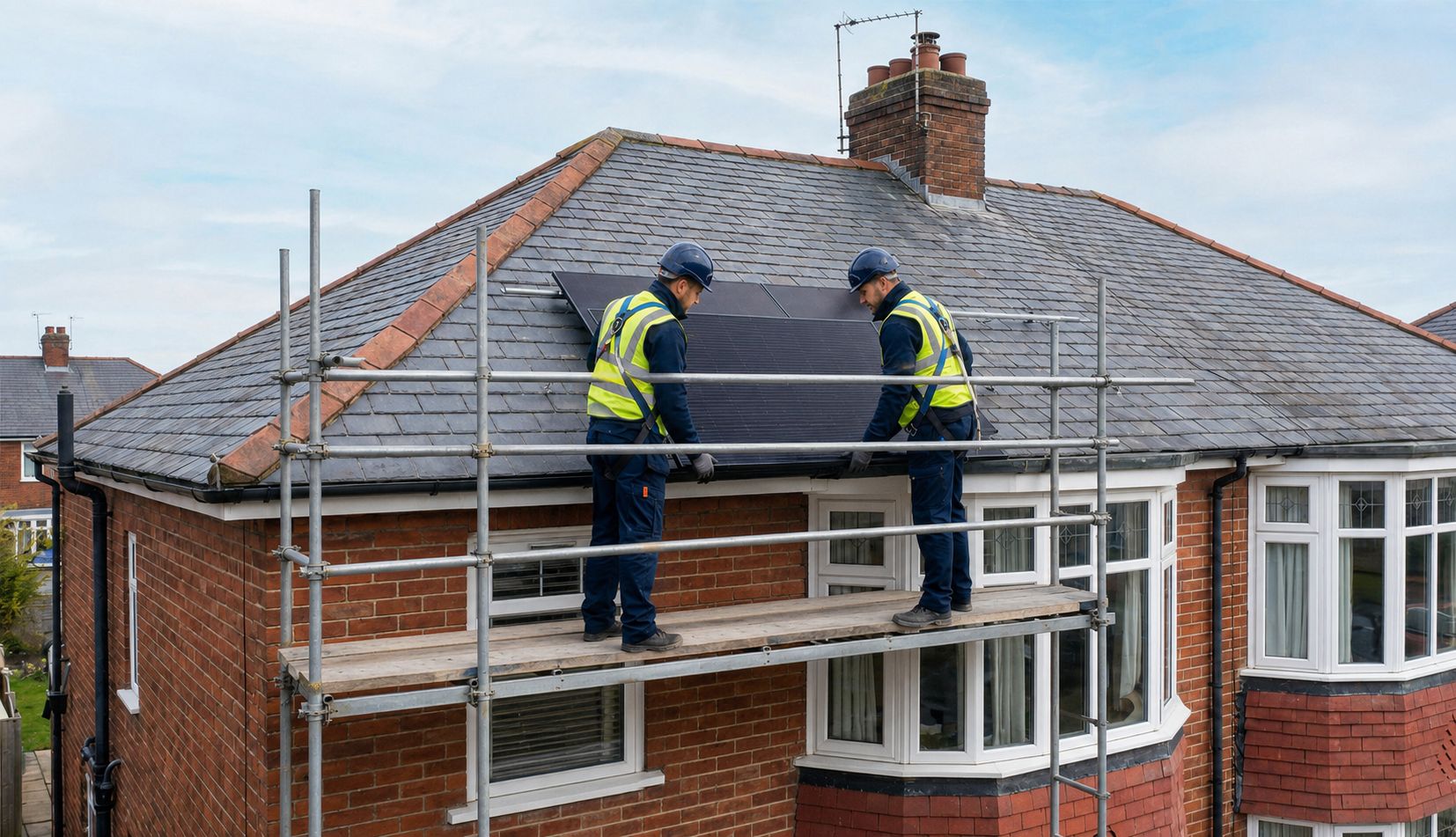
How are solar panels installed?
The Installation Phase
Once the design is finalised, the physical installation is remarkably quick, typically taking between one and three days. Most of the work occurs on the roof or in non-living areas like the loft or garage. The team fits the mounting system, installs the panels, and sets up the inverter—the “brain” of the system that converts solar energy into usable power for your appliances. To ensure high standards, you will receive an MCS certificate upon completion, which serves as a formal mark of quality and safety.
Installing the solar panel system
Can I install solar panels myself?
Whilst it’s not illegal to install your own solar panels, you will need a qualified electrician to connect the panels to your electrical system. It’s always best to trust a MCS-certified installer for painless set up, and to qualify for any export payments.
Enhancing and Maintaining Your System
You can boost your energy independence by adding a solar battery to store daytime energy for night use or an immersion heater to provide solar-heated water. Once your system is live, it is built to last around 30 years. Maintenance is simple, requiring only basic annual visual checks and a professional technical service every five years to ensure your home continues to generate power at its peak potential.
Contact us today
Get in touch to discover how our energy solutions can lower your bills and improve your home.